


Calorie density: One concept you have to master
It might sound a little scientific, but it’s actually a straightforward concept. Let’s break it down with an example.
Imagine you have a strawberry and a piece of chocolate, both weighing 20 grams.
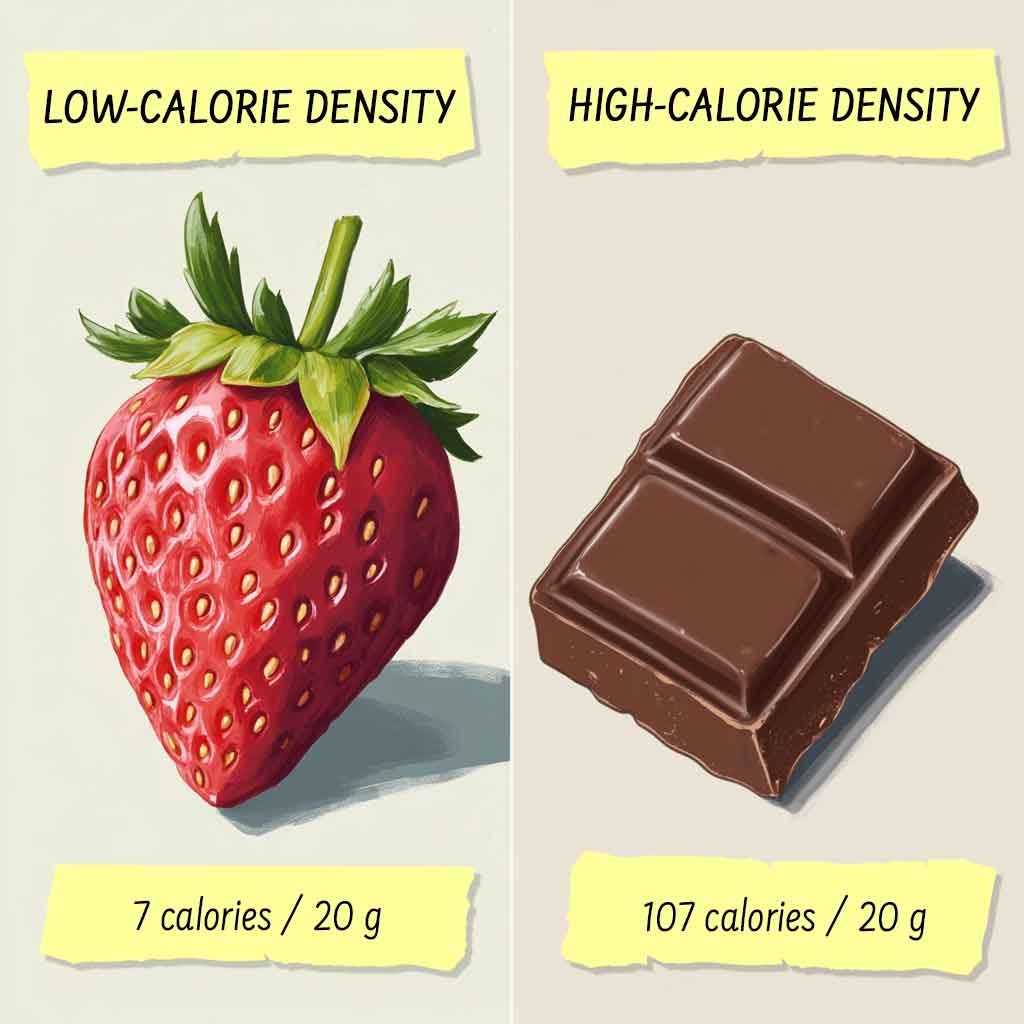
Even though they weigh the same, the strawberry only gives you 7 calories, while the chocolate is packed with 107 calories!
The difference here is in calorie density. The strawberry has a low-calorie density, meaning it provides fewer calories for its weight, while the chocolate has a high-calorie density, delivering 15 times more calories for the same amount of food.
Common low-calorie density foods include fruits and vegetables, while high-calorie density foods are things like cookies, chocolate, nuts, and oils.
When you're trying to lose weight, focusing on low-calorie density foods helps because they fill your stomach (keeping you full) without giving you too many calories. This helps you stay in a calorie deficit, which is essential for fat loss.
It’s not about eating less food overall, but rather eating the same amount of food that’s lower in calories, so you feel satisfied while consuming fewer calories.
In future lessons, you’ll learn to identify which foods are low or high in calorie density, helping you make better food choices.
Takeaway: Different foods provide different amounts of energy (calories) for the same weight. This is called calorie density.